
These are the stories of Elizabeth Quay – interviews with artists, chefs, business owners, tour guides, creatives and community leaders. An insider look at the people and stories that shape this place, and our city.
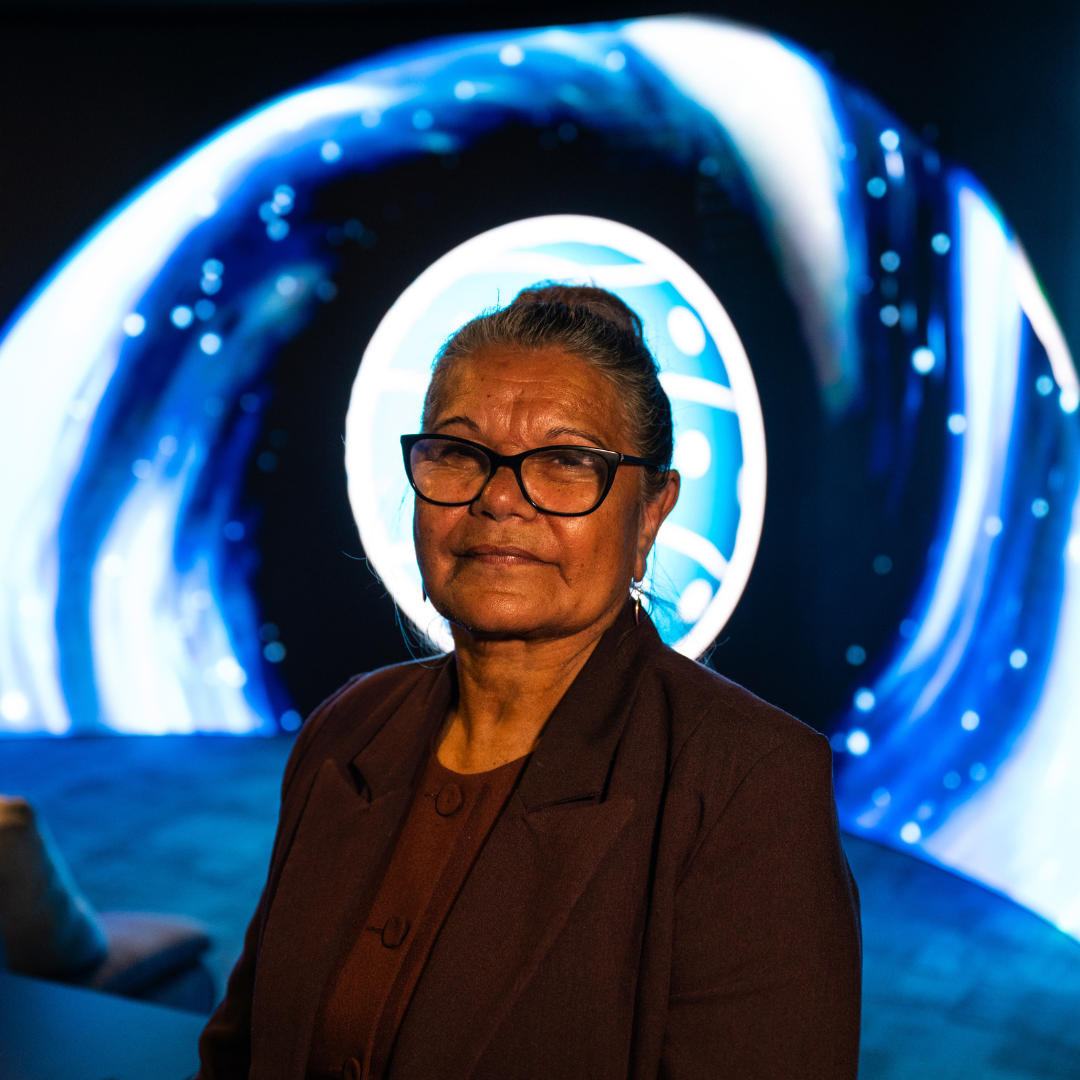
Rose Walley smiles as she reflects on her late mother, Theresa.
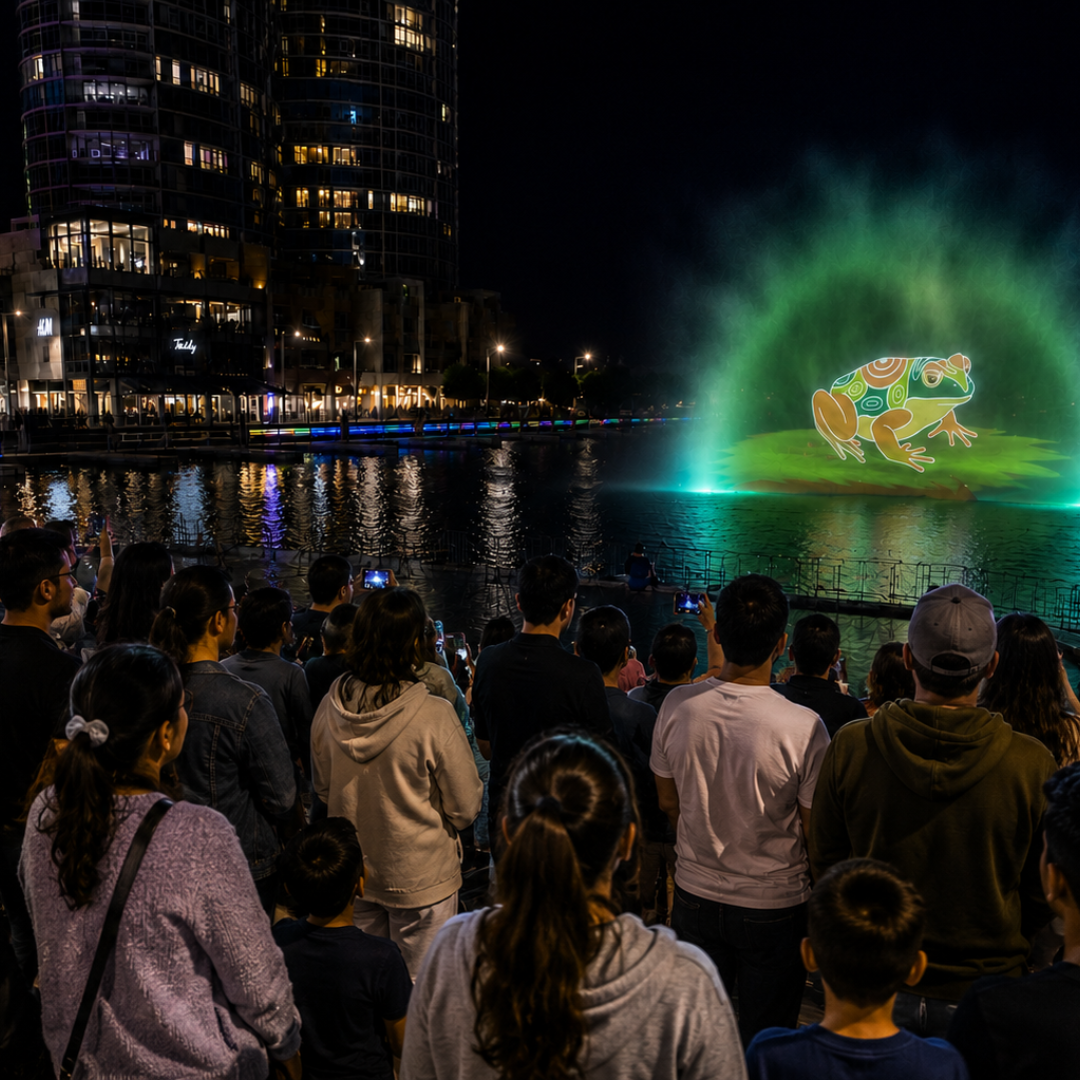
For Rose, being the storyteller behind The Story of Kooyar at Elizabeth Quay is deeply personal. The upcoming water projection show taking place this September brings to life a cherished Noongar tale passed down by her beloved mother, Theresa Walley. It follows the journey of a small frog whose sacred song calls the life-giving rains and heralds a courageous journey through the Noongar six seasons.
The significance of sharing her family’s legacy and culture is clear. It's an opportunity to both honour and celebrate Noongar knowledge, while helping people understand their place within the natural world.
Ahead of the show's opening later this month, we chatted with Rose about the ancient Noongar tale and what it means to bring it to life for thousands of people at Elizabeth Quay.
Taking place at Elizabeth Quay 25 - 28 September, The Story of Kooyar is a free, all-ages cultural experience that brings Noongar storytelling to life through a large-scale water, light and sound show. Explore The Story of Kooyar here.
Hi Rose, can you tell us a little about The Story of Kooyar and your connection to it?
My connection to Kooyar is through my mum. My mum used to write Aboriginal storybooks and Noongar storybooks. She was always educating people about our culture, our Country and our animals and how important they are. The Story of Kooyar comes from the Creation Story. When the Waugal pushed the sky up and the earth down, there were three spirits: the tree spirit, the yemma spirit and the animal spirits. The tree spirit said, "Whoever becomes carers of Country, I will give you wood for fire, I will give you wood for shelter and I will give you food, as long as you do not take all of me." The animal spirit said, "I will give you my meat to keep you strong, my skin so you'll always be warm, as long as you do not take all of me." But there was one little animal who just kept singing and singing and singing. He was one of the smallest of the animals. He was the little frog.
Tell us about Kooyar and what he represents in the story?
The little frog is so important. Because of his size, the other animals didn't think he was big enough to have that kind of responsibility. But Mum would always say, "Be mindful of the little things because sometimes they matter the most. They are just as important." Kooyar needs to sing to Father Ocean and Father Ocean sends the rain during the time when Mother Earth and all the waterways start to dry out. The little frog starts to sing and when the rain comes from Father Ocean it fills up all our waterways and all our beeliars. What it does is give life to everything it touches. So if we remove all our wetlands, then there'll be no home for the little frog. It's not only about our ecosystem but also about our own health and wellbeing. It keeps us strong too.
Everything is in balance.
The Story of Kooyar is a story handed down to you by your mother, the late Theresa Walley. What do you remember most about hearing the story from her and what does it mean to share that story with others today?
My mother always created stories through the eyes of a child. Her storybooks were about our bush animals and they were all children's books. One version would be in Noongar language and another would be in English, so we never forget our language while everybody embraces our culture. Her stories taught children to take care of Country and to look after one another.There are a lot of principles in the storytelling. Always be courageous, be yourself, be resilient and be kind to one another. I think that was her biggest message. Always be kind to one another.
Sharing this story is a legacy that still lives on in all of us, not only through my family but everybody that it touches. It's her way of saying Mother Earth is important. Father Ocean is important. Our animals are important. Our culture is still here and will always be part of us and part of our community.
The story also follows the Noongar six seasons. Why are the six seasons so important to Noongar culture and understanding of Country?
The six seasons represent our climate and our Country. The plants and animals tell us. Even the sun, the moon and the stars tell us. The sun rises earlier as we move into the warmer season and it sets later in the day, so the days become longer. The plants flower at different times of the year. When one finishes flowering, another begins. The eucalyptus trees with the yellow flowers bloom, and when they finish flowering you know another season is coming through. Then the banksias start to flower and you know another season is beginning. Our trees are our indicators. They tell us when the next season is coming.
We need to listen to our Country. It has a voice.
The event takes place on the Derbarl Yerrigan. Why is this location significant for sharing this story?
The river is the giver of life. The river gives life to everything it touches. It's so important because it connects to everything that is part of our wellbeing. In our ancient way, the river is a Waugal dreaming track. Everything it touches has meaning, from our ancient connection through to today. Families still use the river. They still enjoy the river. It's part of their life and part of their spirit. The river is one of the most sacred sites in Perth for Aboriginal people, for Noongar people.
What does it mean to you to share a story that has been passed down through your family with people here on Noongar Country?
It's a legacy that still lives on in all of us. Not only through my family, but through everybody that the story touches. It's my mum's way of saying that Mother Earth is important. Father Ocean is important. Our animals are important. Our culture is still here. It will always be part of us and part of our community. For me, family is everything. I've got two sons, Daniel and Jonathan, and now grandchildren. We've always spent a lot of time in the bush and on Country. Country has been part of them from the time they were babies. From the moment they're born, their feet go into the sand so their spirit is connected to Mother Earth. That's important.
We say "Nitcha boodja". Connected to Country. My mum's legacy is part of us. It's part of our culture. If we don't practise our culture, then we lose something. Country allows us to heal. Once we get strong, then we can face whatever we need to face. It's important.
Is there a particular moment or element of the show that you're especially excited for audiences to experience?
Mainly at the beginning, when Mother Earth was sick, and she needed somebody to sing to Father Ocean when all the waterways, all the beeliars, had started to dry out after the long, dry, hot summer. The little frog jumped forward and he said, "I will sing to Father Ocean." All the animals started laughing at him and saying, "How can one so small hold one great responsibility?" But Mother Earth knew it's not about size, it's about heart.
I think right there and then it's about understanding that no matter how big or small you are, you can achieve greatness if you've got a strong heart. I think that's my favourite part right there.
What do you hope people will feel when they experience The Story of Kooyar?
I hope they experience happiness. I hope they experience how important our Country is and that we all have a responsibility to make sure our wetlands and our rivers are protected. One thing is to make people feel joy and for them to enjoy watching it. But there's also a responsibility that we have, and that is to protect our wetlands and recognise that they are important.