
These are the stories of Elizabeth Quay – interviews with artists, chefs, business owners, tour guides, creatives and community leaders. An insider look at the people and stories that shape this place, and our city.
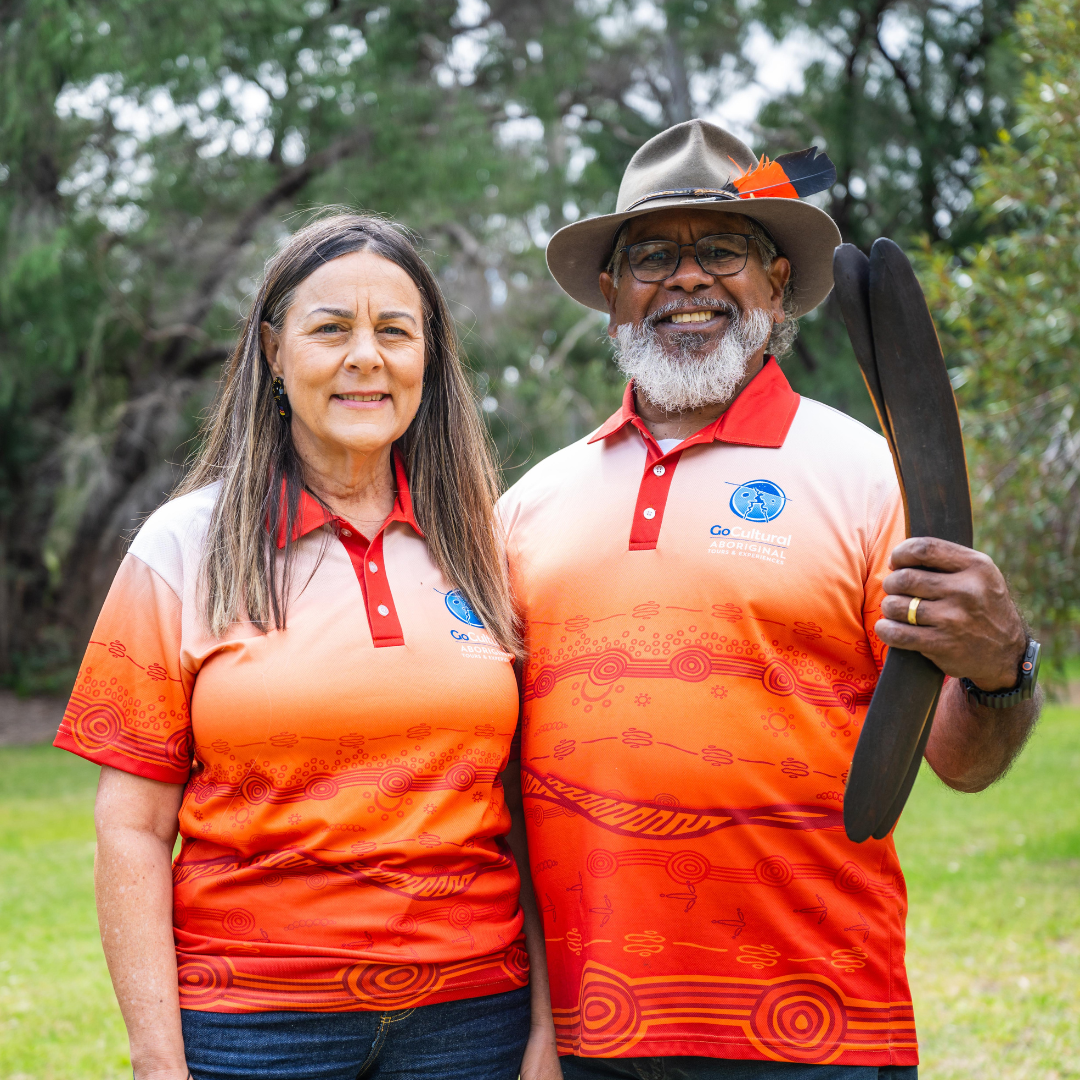
Meeting new people is what Meg and Walter McGuire love most about running cultural walking tours in Perth. That, and the genuine curiosity of those who come along wanting to learn something new about Aboriginal culture.
People can read history books, do their own research and watch documentaries, but there’s something distinctly different about hearing Aboriginal stories, directly from an Aboriginal person.
Meg and Walter have been running cultural tours at Elizabeth Quay for 10 years and they still love seeing someone’s face light up when they learn something new.
Ahead of their new walking tour series launching this October, we spent a morning at Kings Park to find out what continues to inspire them a decade on.
Go Cultural Aboriginal Tours and Experiences launches its new Elizabeth Quay Cultural Walking Tours Series this October, running monthly until May 2027. Explore the tours
Hi Walter and Meg, you're about to kick off another cultural tour series at Elizabeth Quay. Tell us a bit about the tours and what people can expect?
Walter
Go Cultural Aboriginal Tours and Experiences has been operating now for over 10 years, but pretty much our first tour was at Goomup, which is where Elizabeth Quay was established. We've been operating there, telling the First Story about that area and how my old people lived. It's where the city or CBD is now.
We tell the story about the freshwater lakes, the waterways there and the importance of the river system, and how my old people, the old Noongar people, my ancestors, lived and raised their families there. They foraged for food, and the freshwater would have been absolutely amazing in those days because you could drink directly from the water.
What first inspired you to start sharing culture through tours?
Walter
We started because we thought it was pretty central and because Goomup was significant. We talked to the Elders about that area and there was so much that happened there. It’s been documented in the old colonial records how many people frequented the area. It was very central.
There were so many freshwater lakes that trickled down into that area, the food sources, the birdlife. The fact that there are buildings there now, roads and boats on the river is immaterial to the history that was once there. You can’t necessarily see it now, but it remains very significant and it’s still significant for Noongar people.
The Derbarl Yerrigan has deep significance for Noongar people. Can you tell us a little about why it’s such an important place?
Walter
All river systems for Noongar people, and I suppose for a lot of Aboriginal people generally, are significant because water is one of those essential things our bodies need.
The whole river system highlights freshwater places where you can go, swim and take your family. You can also collect food from the river system. Prior to colonisation, our people took fish and other foods from there. It could have been turtle, different types of fish, crabs and other marine life.
Along the river banks there were also waterbirds, eggs and animals that came to the river to drink. So, the river itself is very, very significant.
What keeps you passionate about sharing culture with visitors?
Meg
I think for me, every tour is different because you've got people you've never met before.
Most people come on the tour because they want to learn. By engaging with them and sharing information, we can determine their level of understanding and pitch the tour accordingly.
We get a whole range of visitors. For example, German visitors often arrive having studied Aboriginal culture and history, and sometimes they're asking questions at a really advanced level. Most people come to learn, and that's what makes it rewarding.
Walter
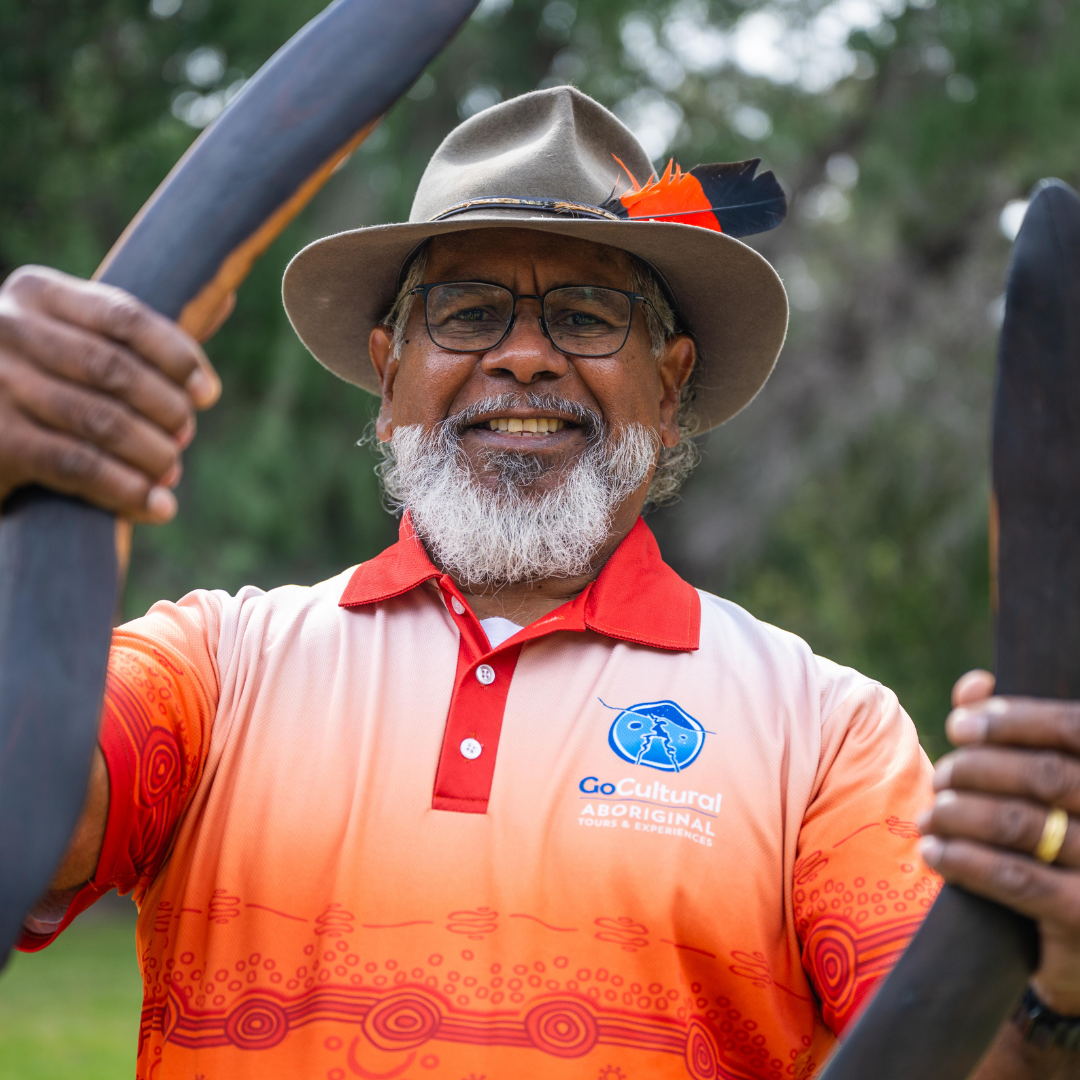
I suppose the thing I get out of it is that people want to know about Aboriginal people and they want to hear it from an Aboriginal person. They genuinely want to learn. It's a great feeling having an audience that's willing to listen and engage.
People can read books, do research and watch documentaries, but hearing it directly from Aboriginal people is different because it's our perspective. We're not pretending to be anything else and we say that up front.
What do you hope people take away from your tours?
Meg
I'd like to think that in the ten years we've been operating, not just at Goomup, but also at Kaarta Koomba, Wadjemup, Boola Bardip and Yagan Square, that we've made a difference. I'd like to think our tours have helped change people's way of thinking.
Hopefully we've helped dispel some stereotypes. Hopefully people leave wanting to learn more and encouraging others to do the same.
If something comes along that challenges them to think differently about Aboriginal people, they'll be equipped to respond in an informed way because they've taken the time to learn. Learning more about history empowers people. It gives them confidence to answer questions and have conversations in a thoughtful and informed way.
Walter
The thing that inspires me is meeting new people every time we do a tour. I like seeing people's faces light up when they learn something.
Sometimes they leave feeling happy, sometimes they feel sad because of the history, but we always try to leave people feeling uplifted.
Walter, earlier this year you were awarded an OAM for your contribution to tourism. What did that recognition mean to you?
Walter
Over the last ten-plus years, Meg and I have built Go Cultural together. We've won three consecutive WA Tourism Awards, which led to entry into the Tourism Council WA Hall of Fame. We've represented Western Australia nationally in Aboriginal tourism and won national Gold, Silver and Bronze awards. For us, it was never about winning awards. It was always about telling our story from our perspective.
When I was nominated, I was surprised. I thought, "Who's this crazy person that's nominated me?". It was a nice feeling, but also a humbling feeling.
One of the funny things was that my brother Barry also received an Order of Australia in the same honours round. We were both sitting there waiting for our names to be called and joking with each other like brothers do.
It was a wonderful moment for our family.
